The Ethics of AI Translation: Does Real-Time Dubbing Remove Cultural Nuance?
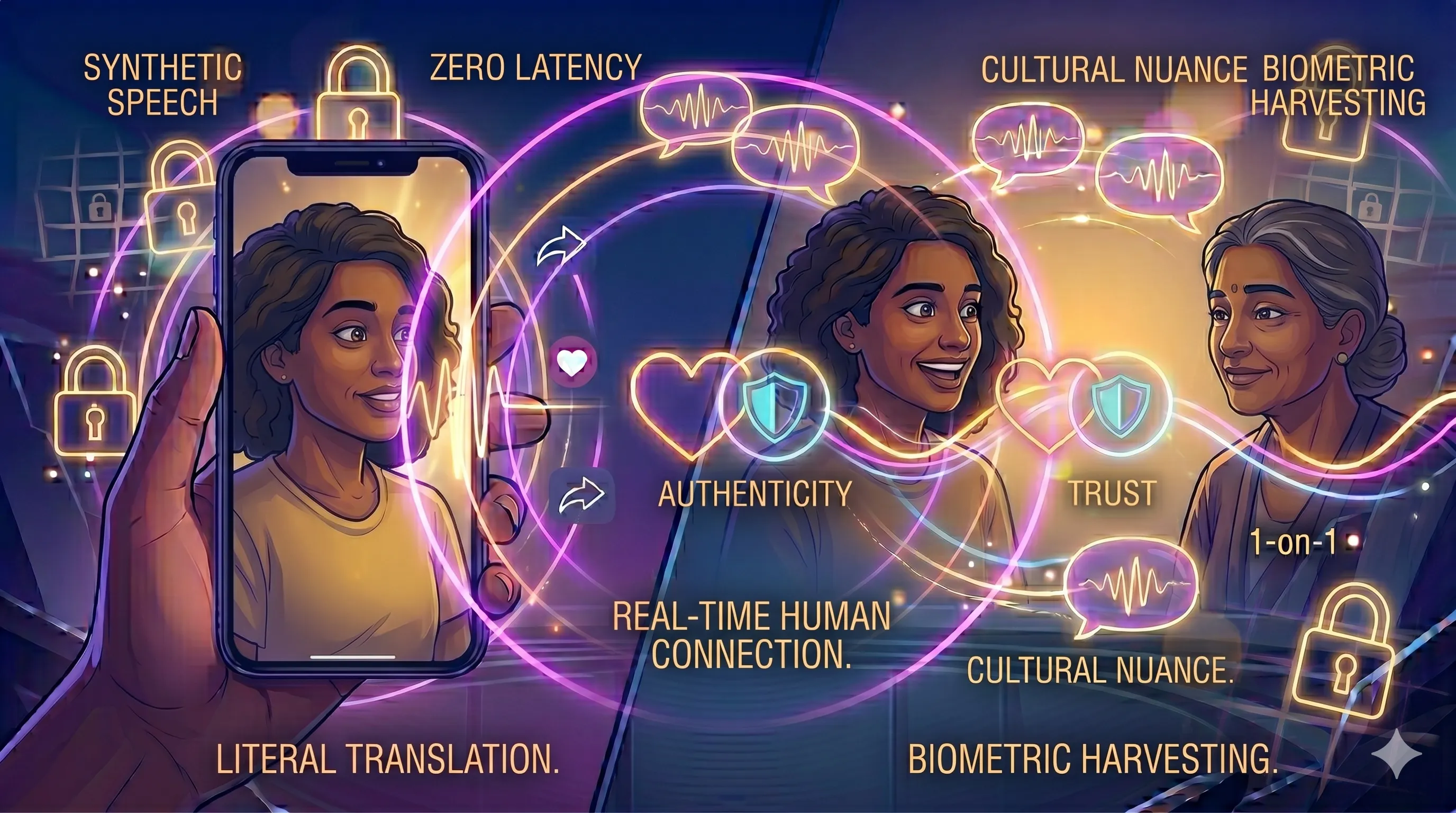
Imagine logging into a 1-on-1 random video chat and connecting with someone in Tokyo or Paris. In previous decades, the language barrier would have ended the conversation in seconds. Today, real-time AI translation—specifically generative voice dubbing—is effectively dissolving that wall. You speak in your native tongue, and your partner hears a hyper-realistic, AI-generated version of your voice speaking their language fluently.
While this is a triumph of engineering, it forces us to ask a difficult question: When we translate words perfectly but lose the original rhythm, accent, and cultural weight of the speaker, what happens to the human connection? In this educational dive, we explore the "Human Premium" in translation and the ethics of synthetic voice communication within the no-login revolution.
1. The Rise of the Universal Digital Translator
The dream of a universal translator has moved from sci-fi to a standard browser feature. Using WebRTC technology, modern platforms can now process audio streams through neural networks that perform speech-to-text, translation, and text-to-speech dubbing with sub-200ms latency. This "Zero Friction" approach is a massive driver for digital serendipity.
Whether you are in a USA chat or a Tamil chat, the ability to understand anyone is a superpower. But this capability risks stripping away the specific cultural perspective inherent in original linguistic structures.
2. Voice as Identity: The "Human Premium"
As explored in our analysis of the Human Premium, value is found in authenticity. Voice is more than just data; it carries regional history, personal emotion, and social context. When AI dubs over a speaker, it often smooths out the very "imperfections"—hesitations, lilts, tremors—that signal real human presence.
3. Comparative View: Machine vs. Nuanced Translation
| Feature | Literal AI Translation | Human-Centric Nuance |
|---|---|---|
| Goal | Information Exchange | Emotional Connection |
| Voice | Synthetic / Standardized | Original / Unique Accent |
| Context | Dictionary-based | Culturally Situated |
4. The Dilemma: Erasure or Inclusion?
Does AI dubbing serve cultural inclusion or cultural erasure? It includes those previously excluded by language, allowing an entrepreneur in a small village to pitch ideas in an anonymous digital Third Place. However, defaulting to standardized accents reinforcements linguistic hierarchies and erases the diversity of the human voice.
5. Privacy in the Age of Listening AI
To translate, AI must "listen," raising privacy concerns. Users are turning to a zero-data philosophy precisely because they don't want biometric voice data harvested. The ethical challenge for 2026 is moving translation to local, on-device processing rather than cloud-based storage.
6. Toward Augmented Understanding
The future likely involves Augmented Communication—keeping the original voice audible at a lower volume while providing translated captions. This preserves the Human Premium while bridging gaps, helping fight social media burnout by making global connections feel like real-life encounters.
7. Conclusion: Bridges, Not Destinations
As we navigate the paradox of anonymity, we must remember that AI translation is a bridge. By learning how to talk to strangers safely and with cultural humility, we can build a global human web that values both the words said and the unique voice saying them.
Frequently Asked Questions
Yes. Current models prioritize literal meaning over idioms and subtext, often missing the deeper "why" behind a speaker's words.
It depends on the platform. Look for services that prioritize zero-data policies and local processing to ensure your voice prints aren't stored in the cloud.