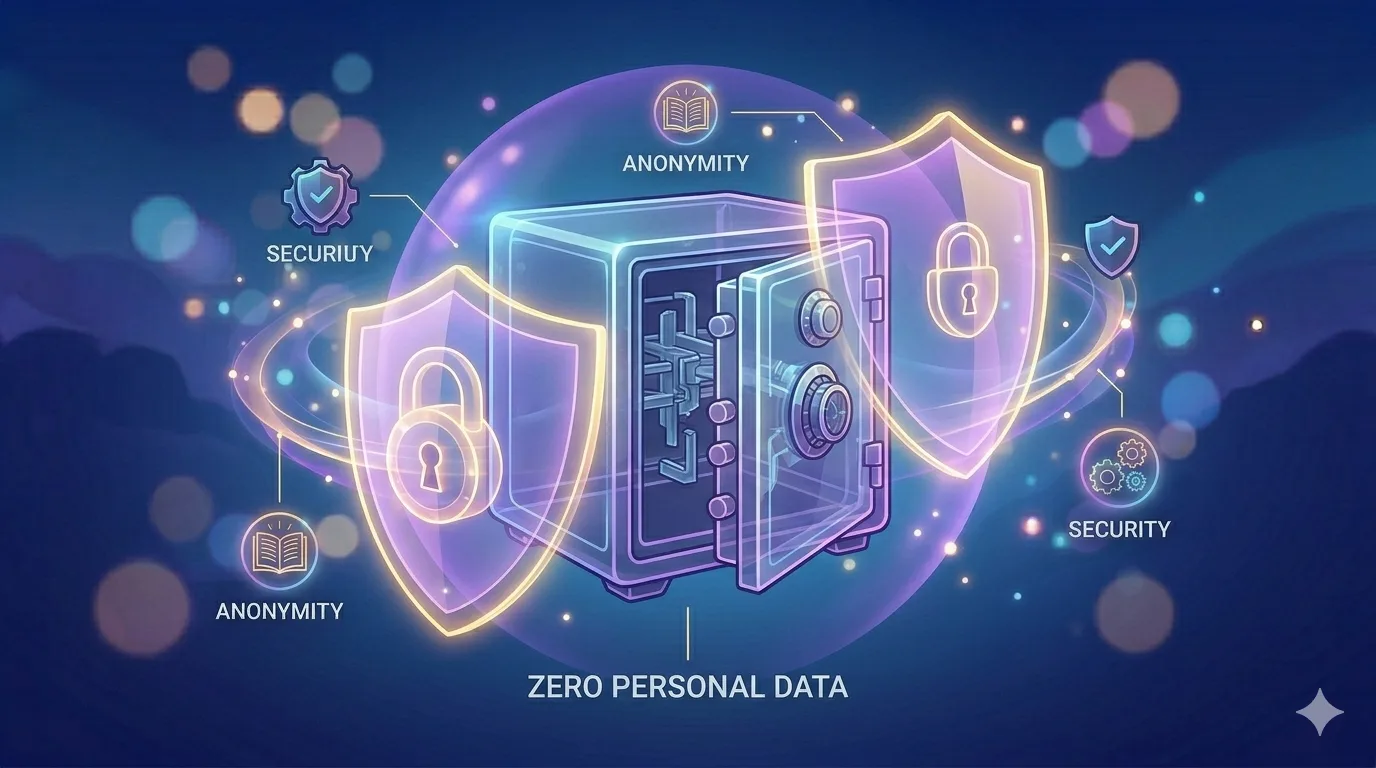
The Ghost Architecture: How to Build a Connection Platform with Zero Personal Data
For the last twenty years, the internet has operated on a foundational, unspoken trade agreement: you get free access to a platform, and in exchange, the platform gets to harvest, package, and sell every granular detail of your digital existence. The phrase "If you aren't paying for the product, you are the product" has defined Web 2.0. However, in 2026, user sentiment has violently shifted. Plagued by endless data breaches, invasive targeted ads, and geopolitical surveillance, users are demanding a new way to connect.
They are demanding platforms that don't just "protect" their data, but platforms that outright refuse to collect it. This paradigm shift requires a radical re-engineering of how we build social software. We call this framework the "Ghost Architecture." In this deep dive, we explore how platforms like Chatzyo execute high-fidelity random video chat while leaving absolutely no digital footprint behind.
The Trap of the "Secure" Login
When you visit a traditional social network or dating app, the very first screen you encounter is the "Sign Up" wall. You are asked for your email, your phone number, your date of birth, and often, permission to sync your contacts. Companies claim this is for "security and authentication."
In reality, this is the creation of a "Honeypot." The moment a platform collects millions of emails, passwords, and demographic identifiers, it becomes an irresistible target for hackers. The platform must then spend millions of dollars on cybersecurity to build thicker walls around this mountain of sensitive data. It is an arms race that the platforms inevitably lose, as evidenced by the daily headlines of massive database leaks.
The core tenet of the Ghost Architecture is a strict "no-login" policy. The safest way to protect a user's data is to never possess it in the first place. If a platform doesn't have a database of emails, passwords, or phone numbers, there is nothing for a hacker to steal. You become a digital ghost.
Engineering Ephemerality: The Browser Sandbox
If there are no accounts, how does the platform actually work? The secret lies in treating the user's browser as a temporary, localized operating system. As we discussed in our article on why browser video beats native apps, modern web browsers (Chrome, Safari, Firefox) utilize a highly secure "Sandbox."
When you visit a platform built on Ghost Architecture, you are given a temporary session ID. This ID exists only in your browser's temporary memory (RAM). You are not tracked via permanent cookies, and your activity is not logged against a master profile. When you close the tab, the sandbox collapses. The session ID is destroyed. You vanish.
This allows users to explore 1-on-1 video calls with absolute digital anonymity. The platform serves as a mere conduit, a temporary meeting room that is swept clean the second the occupants walk out the door.
WebRTC: The P2P Privacy Shield
The most complex part of building a video chat platform is routing the actual media (the audio and video data). Traditional platforms route this media through their own central servers. This allows them to record, transcribe, and analyze your conversations for "quality assurance" or ad targeting.
The Ghost Architecture forbids this. Instead, it relies on WebRTC architecture. WebRTC establishes a direct Peer-to-Peer (P2P) connection between you and the stranger. The video stream flows directly from your device to theirs, completely bypassing the platform's central servers. Because the platform's servers never touch the media, it is mathematically impossible for the platform to record or eavesdrop on the conversation. The connection is inherently private by the laws of physics and network topology.
The Financials of Privacy
A common question we receive from other developers is: "If you don't harvest data to sell to advertisers, how do you sustain the platform?" The answer is elegant engineering.
Storing petabytes of user data, chat logs, and encrypted media streams requires massive, wildly expensive cloud infrastructure. Because Ghost Architecture platforms refuse to store this data, their server footprints are incredibly small and agile. We only need to run lightweight signaling servers (to establish the initial connection) and STUN/TURN servers for NAT traversal.
By drastically reducing our overhead costs through P2P routing and zero-data retention, we can maintain profitability through simple, non-intrusive contextual advertising, rather than relying on the predatory, behavioral-targeted advertising models of Web 2.0 giants.
Balancing Anonymity with Safety
The ultimate challenge of the Ghost Architecture is moderation. If everyone is a ghost, how do you prevent bad actors from abusing the platform? This is where localized, session-based moderation comes into play.
While we do not know who a user is, we can analyze the behavior of a session in real-time. If a specific, temporary connection receives multiple flags from other users for violating our Community Guidelines, that session can be instantly terminated, and temporary network-level blocks can be applied without ever needing to know the user's name or email. It is a delicate balance, but one that proves safety does not have to come at the cost of mass surveillance.
Frequently Asked Questions
Preferences (such as your camera choice or mic volume) are saved locally on your device using LocalStorage within your browser. This data never leaves your computer and is never sent to our servers, keeping you completely in control.
No. While WebRTC establishes a direct path for video data, modern browsers heavily sandbox this connection. The other user cannot execute code on your machine or access your hard drive. They only receive the exact media stream you give the browser permission to send.
We use contextual advertising rather than behavioral advertising. This means the ads you see are based on the general context of the page (e.g., you might see tech ads on a tech blog post), rather than a creepy, hidden profile built from your browsing history across the web.
Conclusion: Reclaiming the Connection
The Ghost Architecture is more than just a technical blueprint; it is a philosophical stance. It is the belief that human connection is a fundamental right, not a commodity to be mined, analyzed, and sold to the highest bidder. By committing to a strict zero-data retention policy and leveraging the power of WebRTC, we are proving that the internet can still be a place of spontaneous, wild, and entirely private discovery.